

As a reputable supplier of Chemical Dosing Storage Tanks, I understand the critical importance of ensuring the uniform mixing of chemicals within these tanks. Uniform mixing is not only essential for the effectiveness of chemical dosing processes but also for maintaining the quality and consistency of the end - products. In this blog, I will share some key strategies and considerations to achieve this goal.
Understanding the Basics of Chemical Mixing in Dosing Tanks
Before delving into the methods of ensuring uniform mixing, it's crucial to understand the factors that can affect the mixing process. Chemical properties such as density, viscosity, and reactivity play a significant role. For instance, chemicals with high viscosity may require more energy to mix evenly compared to low - viscosity ones. The size and shape of the dosing tank also impact mixing. Tanks with irregular shapes or internal baffles can either enhance or impede the mixing process, depending on their design.
Selecting the Right Dosing Tank
The first step in ensuring uniform mixing is to choose the appropriate dosing tank. Our Chemical Dosing Storage Tanks come in a variety of sizes and materials to meet different requirements. For smaller - scale applications, our Dosing Tank 100Ltr for Chemicals is a popular choice. It is made of high - quality materials that are resistant to chemical corrosion, ensuring the longevity of the tank and the integrity of the chemicals stored inside.

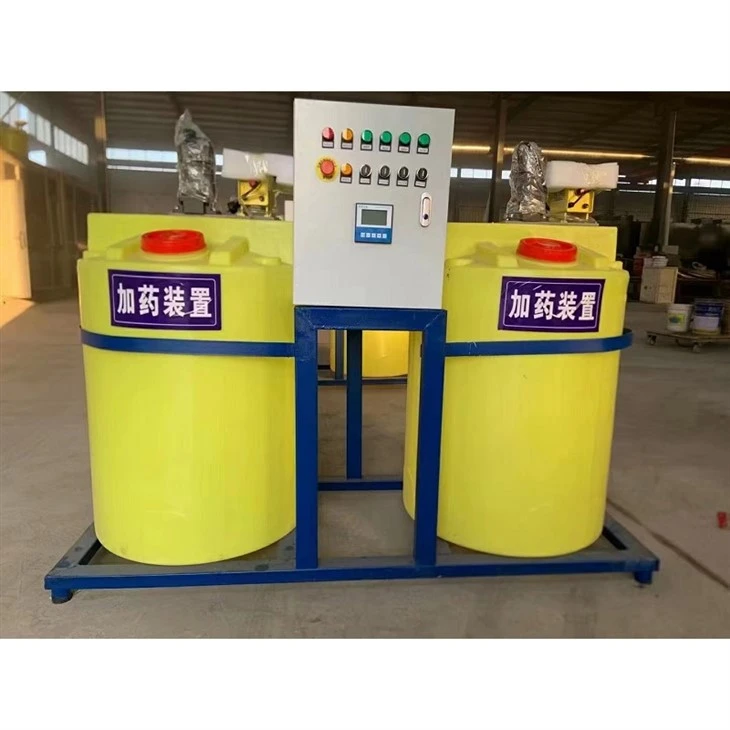
For more specialized applications, our Chemical Dosing PE Tanks offer excellent chemical resistance and are lightweight, making them easy to install and maintain. The choice of tank material is also important as it can interact with the chemicals being stored. For example, some chemicals may react with certain metals, so a non - metallic tank like a PE tank may be more suitable.
Mixing Equipment
Proper mixing equipment is essential for achieving uniform chemical mixing. There are several types of mixing equipment available, each with its own advantages and limitations.
Agitators
Agitators are one of the most common types of mixing equipment used in dosing tanks. They work by creating a flow pattern within the tank, which helps to disperse the chemicals evenly. There are different types of agitators, such as propeller agitators, turbine agitators, and paddle agitators. Propeller agitators are suitable for low - viscosity fluids and can create a strong axial flow. Turbine agitators, on the other hand, are more effective for high - viscosity fluids and can create both radial and axial flows. Paddle agitators are often used for gentle mixing and are suitable for applications where the chemicals are sensitive to shear forces.
When selecting an agitator, it's important to consider the size of the tank, the viscosity of the chemicals, and the desired mixing intensity. The speed of the agitator also plays a crucial role. Too low a speed may not provide sufficient mixing, while too high a speed can cause excessive splashing and foaming, which can affect the accuracy of dosing.
Static Mixers
Static mixers are another option for achieving uniform mixing. They are passive devices that use stationary elements to create turbulence and mix the chemicals as they flow through the mixer. Static mixers are particularly useful for continuous dosing applications where a constant flow of mixed chemicals is required. They are easy to install and require minimal maintenance. However, they may not be as effective for high - viscosity chemicals or for achieving very high levels of mixing uniformity.
Operational Considerations
In addition to selecting the right tank and mixing equipment, proper operational procedures are also necessary to ensure uniform mixing.
Loading Sequence
The order in which chemicals are loaded into the dosing tank can have a significant impact on the mixing process. It's generally recommended to add the chemicals in a specific sequence, starting with the base chemical and then gradually adding the other components. This helps to prevent the formation of clumps or uneven concentrations.
Mixing Time
The duration of the mixing process is also crucial. Insufficient mixing time can result in uneven distribution of chemicals, while over - mixing can waste energy and may even cause chemical degradation. The optimal mixing time depends on several factors, including the type and quantity of chemicals, the size of the tank, and the type of mixing equipment used. It's important to conduct tests to determine the appropriate mixing time for each specific application.
Temperature and Pressure
Temperature and pressure can also affect the mixing process. Some chemicals may require a specific temperature range to mix properly. For example, increasing the temperature can reduce the viscosity of some chemicals, making them easier to mix. Pressure can also impact the solubility and reactivity of chemicals. It's important to monitor and control the temperature and pressure within the dosing tank to ensure optimal mixing conditions.
Maintenance and Monitoring
Regular maintenance of the dosing tank and mixing equipment is essential for ensuring long - term uniform mixing. This includes cleaning the tank and equipment to prevent the buildup of chemical residues, which can affect the mixing efficiency. Inspecting the agitator blades or static mixer elements for wear and tear is also important. Damaged parts should be replaced promptly to maintain the effectiveness of the mixing process.
Monitoring the chemical composition and concentration within the dosing tank is also necessary. This can be done using various analytical techniques, such as chemical sensors or sampling and laboratory analysis. By regularly monitoring the chemical properties, any deviations from the desired mixing uniformity can be detected early, and corrective actions can be taken.
Quality Control
Implementing a comprehensive quality control program is crucial for ensuring the uniform mixing of chemicals in dosing storage tanks. This includes setting up quality standards for the mixed chemicals, conducting regular inspections and tests, and documenting the results. Quality control measures help to ensure that the chemicals meet the required specifications and that the dosing process is consistent and reliable.
Conclusion
Ensuring the uniform mixing of chemicals in dosing storage tanks is a complex but essential process. By selecting the right dosing tank, using appropriate mixing equipment, following proper operational procedures, and implementing regular maintenance and monitoring, you can achieve optimal mixing results. As a supplier of Chemical Dosing Storage Tanks, we are committed to providing high - quality products and solutions to help you meet your chemical dosing needs. If you have any questions or would like to discuss your specific requirements, please feel free to contact us for further details and procurement discussions.
References
- Perry, R. H., & Green, D. W. (1997). Perry's Chemical Engineers' Handbook. McGraw - Hill.
- McCabe, W. L., Smith, J. C., & Harriott, P. (2005). Unit Operations of Chemical Engineering. McGraw - Hill.