


Chemical Dosing Pump For Water Treatment Plants – Precision Metering for PAC, PAM, Acid, Alkali & Disinfectants
In any water or wastewater treatment plant-whether a municipal plant, industrial facility, or RO desalination unit-reliable chemical dosing is non-negotiable. Under-dosing risks poor effluent quality; over-dosing wastes money and may violate discharge limits. Our industrial chemical dosing pump for water treatment plants deliver ±2% accuracy, corrosion-resistant performance, and seamless integration with DAF units, clarifiers, sludge dewatering machines, and reverse osmosis skids. Trusted by engineers across 20+ countries for continuous, trouble-free operation.
Our chemical dosing pump offers high performance with a capacity up to 500L/H and with outstanding values for pressure applications up to 12 Bar. Durable and cost-effective, they are suitable for numerous industries, including water treatment, chemicals, power generation, food and beverage, papermaking, and textiles.


Why Our Dosing Pumps Are Engineered Specifically for Water Treatment Plants
* Chemical-Specific Material Selection: Pump heads, diaphragms, and valves matched to your chemical-PTFE for chlorine, PVDF for acid, Santoprene for PAM emulsions.
* Stable Flow Under Pressure Fluctuations: Maintains accuracy even when back pressure varies (e.g., during filter backwash or membrane fouling).
* System-Ready Integration: Pre-wired with 4–20mA, pulse, or Modbus for direct connection to your PLC, SCADA, or existing chemical dosing skid.
* Low Maintenance & Leak-Free Design: Double-diaphragm or hydraulic diaphragm technology eliminates seal leaks-critical for hazardous chemicals.
* Wide Flow Range: From 0.5 L/h (antiscalant in small RO) to 10,000 L/h (PAC in large municipal plants).
* Global Compliance: CE certified, ISO 9001 manufactured, and ATEX optional for hazardous zones.
Choosing the Right Dosing Pump for Your Water Treatment Plant
1. Solenoid-Driven Metering Pumps
* Ideal For: Low-flow, intermittent dosing in small-scale systems.
* Typical uses: Antiscalant in RO, pH correction in drinking water, nutrient dosing in MBR.
* Flow Range: 0.5 – 20 L/h
* Max Pressure: 10 bar
2. Motor-Driven Mechanical Diaphragm Pumps
* Ideal For: Continuous, high-pressure applications in industrial and municipal plants.
* Typical Uses: PAC/PAM dosing for DAF or sludge dewatering, sodium hypochlorite disinfection, acid/alkali neutralization.
* Flow Range: 5 – 5,000 L/h
* Max Pressure: 20 bar
Chemicals We Safely Dose in Water Treatment Applications
* Coagulants: Polyaluminum Chloride (PAC), Ferric Chloride, Alum
* Flocculants: Polyacrylamide (PAM) – anionic, cationic, non-ionic (powder, emulsion, liquid)
* pH Adjusters: Sulfuric Acid (H₂SO₄), Hydrochloric Acid (HCl), Sodium Hydroxide (NaOH)
* Disinfectants: Sodium Hypochlorite (NaOCl), Chlorine Dioxide (ClO₂)
* RO Pretreatment: Antiscalants, Dechlorination agents (sodium bisulfite)
* Others: Defoamers, corrosion inhibitors, phosphate, fluoride
Technical Data
| Model |
Flow Quantity (L/H) |
Power (W) |
Diaphragm Diameter (MM) |
The Highest Uttars Pressure |
Flow Adjustment | Pump Head Material | Connection Mode | |
| Hose | Hard Tube | |||||||
| OP10 | 26 | 60 | 64 | 10 | Adjustable whilst operation | PPG/PTFE/SUS304 |
Inner diameter 9mm, Outer diameter: 15mm |
DN15 |
| OP20 | 40 | 60 | 64 | 10 | ||||
| OP30 | 50 | 60 | 64 | 10 | ||||
| OP50 | 70 | 60 | 64 | 6 | ||||
| OP90 | 89 | 60 | 64 | 3 | ||||
| OP90-B | 100 | 60 | 64 | 3 | ||||
| OP120 | 120 | 60 | 64 | 3 | ||||
Flow Components Material
| Material | Acids | Alkali class | Mucus and grout | Acid kind | Solvent |
| Pump Head | PPG/PVC | PPG/PVC | PPG/PVC | PVDF/PTFE | SUS316/304 |
| Ball Valve | Ceramic | Ceramic | SUS316 | Ceramic | SUS316/304 |
| Ball Seat | PPG/PVC | PPG/PVC | PPG/PVC | PVDF/PTFE | SUS316/304 |
| O-rings | Fluorine rubber | Fluorine rubber | EPDM | Fluorine rubber | -- |
| Diaphragm | PTFE+NBR | ||||
| Typical Cases | ① Acids: Sulfuric acid, Hydrochloric acid, hypochlorous; ② Alkali class: Hydrogen oxidation ③ Mucus and grout: PAC, PAM ④ Acid kind: Sulfuric acid, Hydrofluoric acid ⑤ Solvent: Organic solvent |
||||
Built to Integrate-Not Just Install
We understand your chemical dosing pump doesn't operate in isolation. That's why we design for real-world system compatibility:
* Pre-tested with common water treatment controllers (Siemens, Allen-Bradley, Schneider)
* Mounting brackets compatible with standard chemical skids
* Optional accessories: pulsation dampeners, back-pressure valves, foot valves, calibration cylinders
* Full documentation: wiring diagrams, material compatibility charts, maintenance manuals
More Than a Dosing Pump Supplier-Your Water Treatment Ally
With over 20 years specializing in water and wastewater equipment, we don't sell "off-the-shelf" chemical dosing pumps-we provide application-engineered solutions. Every order includes:
* Free chemical compatibility review (send us your SDS)
* Pump sizing based on your flow, pressure, and chemical data
* Factory testing under simulated operating conditions
* Global technical support in English and Chinese
* 24-month warranty, fast spare parts delivery worldwide
Get a chemical dosing pump that lasts, performs, and integrates-without guesswork.
Get Expert Pump Selection & Free Quotation
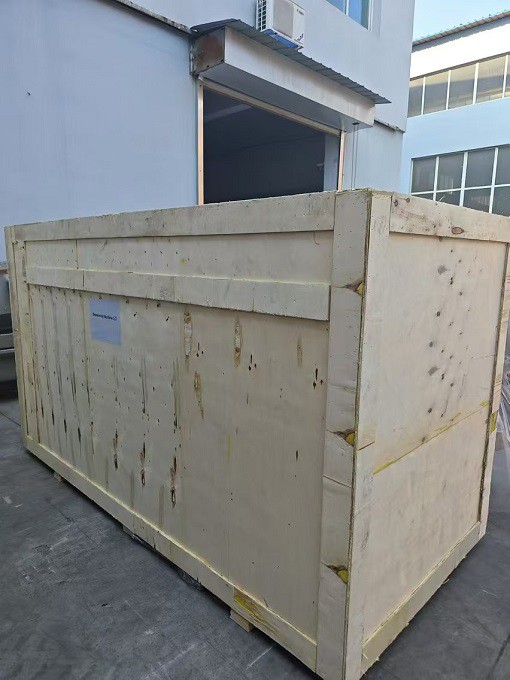
Packages of Chemical Dosing Pump


Our Certificates


Frequently Asked Questions
Q1: Can your Chemical Dosing Pump handle viscous cationic PAM without clogging?
A: Yes. For PAM (especially emulsions or high-molecular-weight powders), we recommend motor-driven diaphragm pumps with oversized check valves and Santoprene diaphragms. We also advise dilution to ≤0.3% concentration and use of low-shear mixers upstream.
Q2: How do I connect the pump to my existing control system?
A: All our pumps come with standard 4–20mA input for remote flow control. For digital integration, we offer Modbus RTU (RS485) or Modbus TCP (Ethernet). Just share your PLC model-we'll provide wiring diagrams.
Q3: What's the typical lifespan of a Chemical dosing pump in a Water Treatment Plant?
A: With proper chemical compatibility and routine maintenance (diaphragm replacement every 12–24 months), our pumps operate reliably for 5–10 years.


